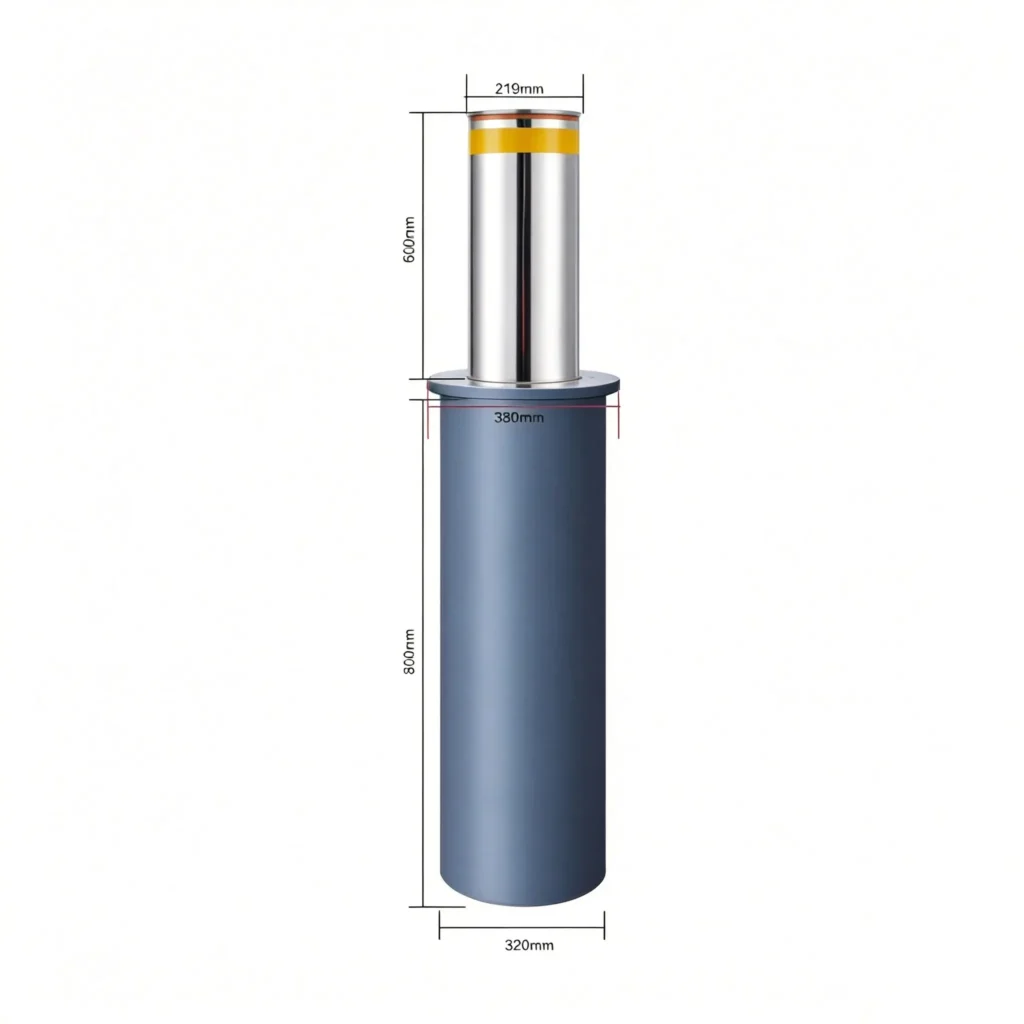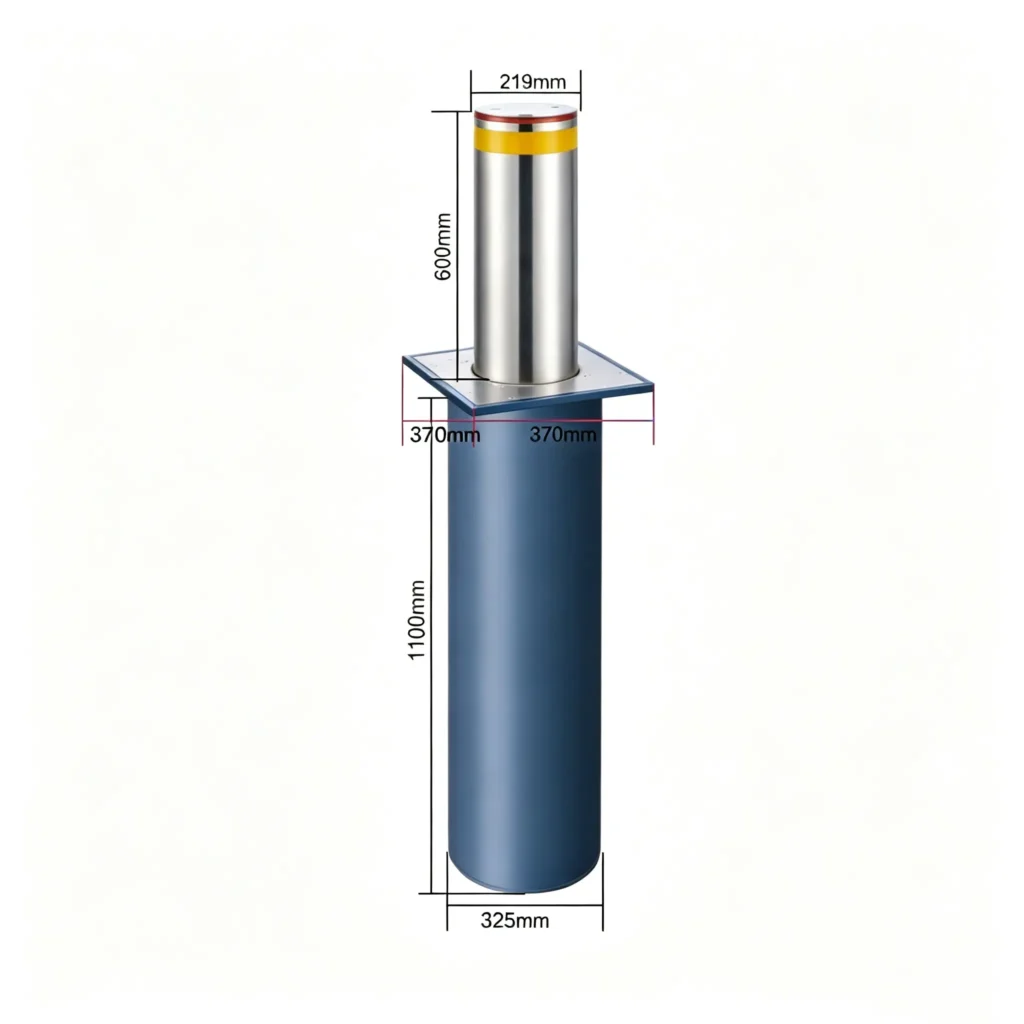
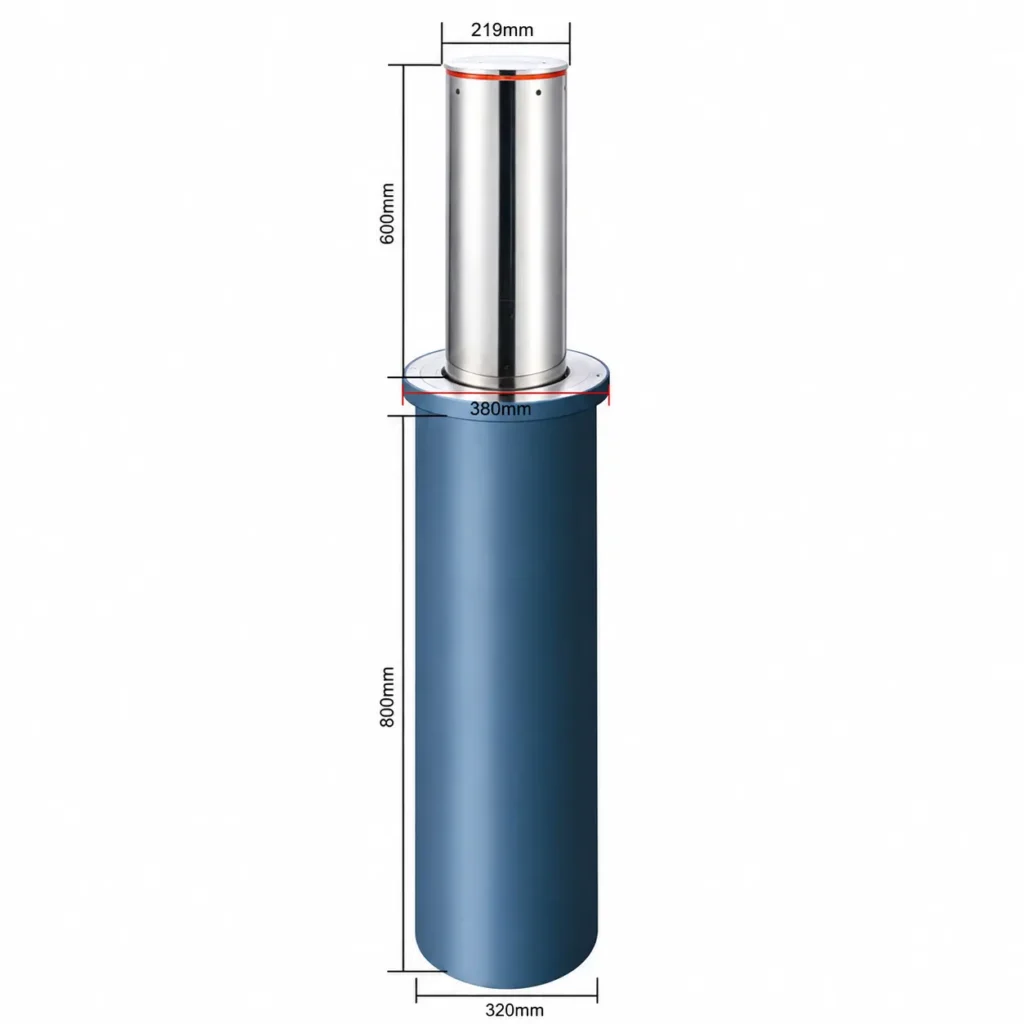
Product Details
Automatic security bollards are retractable vehicle barriers used to control vehicle access to restricted or protected areas. They automatically rise and lower using an electric or hydraulic drive system and can be integrated with remote controls, access control systems, license plate recognition, loop detectors, and other security devices.
Unlike conventional automatic bollards that require external drainage around the underground cylinder, our drainage-free design uses a sealed underground structure, making installation easier in locations where drainage construction is difficult.
| Technical Parameter | Specification |
|---|---|
| Bollard Diameter | Ø219 mm, Customizable |
| Rising Height | 600 mm, Customizable |
| Embedded Depth | 800 mm |
| Bollard Wall Thickness | 6 mm ± 0.5 mm |
| Flange Size | 8 mm Thick, Ø360 mm |
| Bollard Material | 304 Stainless Steel |
| Rising / Lowering Time | 3–5 Seconds |
| Waterproof Rating | IP68 |
| Operating Voltage | 220V |
| Motor Power | 350W |
Why Choose Drainage-Free Automatic Security Bollards?
Conventional automatic security bollards often rely on drainage pipes, soakaway pits, sump systems, or pumps to prevent water from accumulating around the underground unit. This can increase civil work, installation time, and dependence on site drainage conditions.
Our drainage-free automatic security bollards are designed to reduce this complexity. By eliminating the need for a conventional external drainage system, they provide a more practical solution for projects where drainage construction is difficult, costly, or unreliable.
No External Drainage System Required
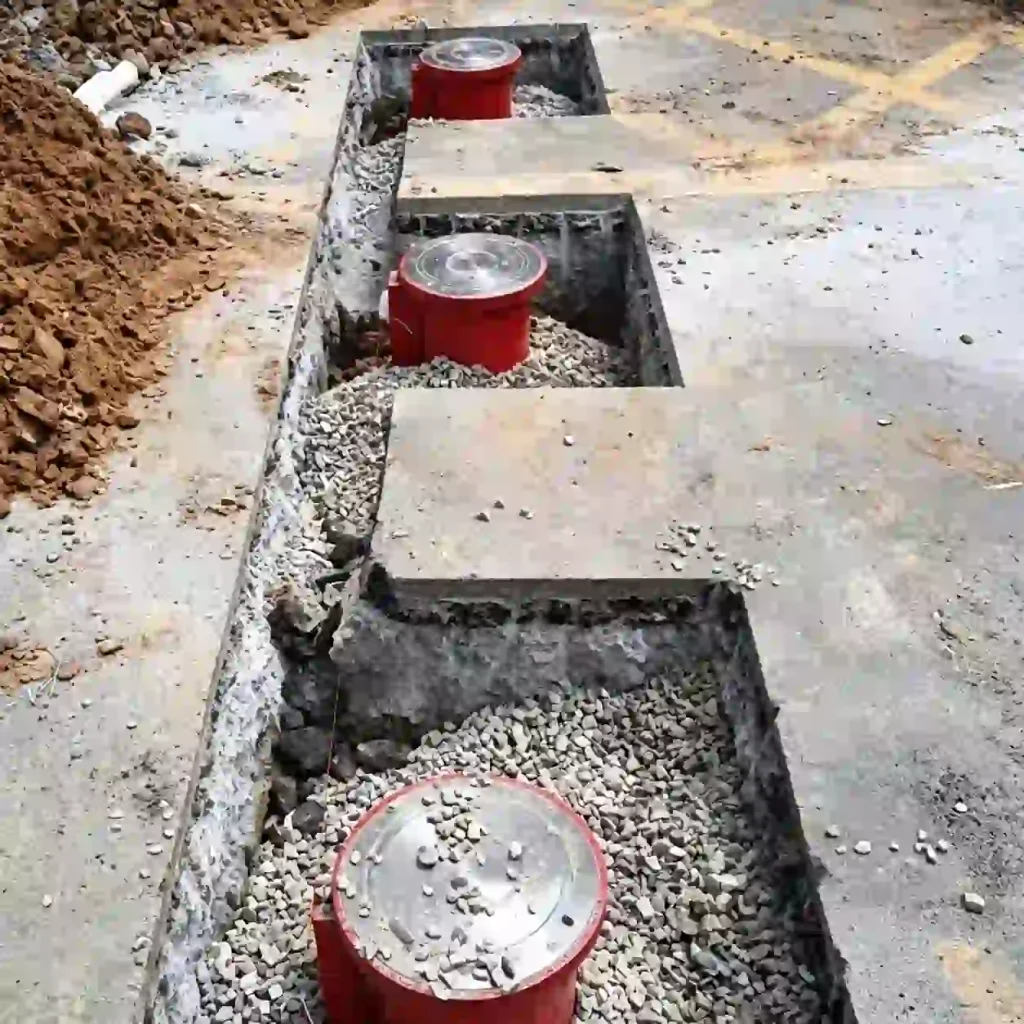
Unlike conventional automatic security bollards that normally require drainage pipes, a drainage well, soakaway pit, or sump pump, drainage-free bollards do not rely on an external drainage system for normal installation.
This simplifies underground construction and reduces the number of drainage components that need to be designed, installed, and maintained around the bollard foundation.
Simplified Civil Work and Faster Installation
Conventional automatic security bollards installations may require additional excavation, drainage trenches, pipe connections, drainage wells, and pumping systems before the bollards can be installed.
A drainage-free design reduces these additional civil works, making foundation construction more straightforward and helping installers complete projects more efficiently.
Better for Sites with Difficult Drainage Conditions
Drainage-free automatic security bollards are particularly suitable for sites where conventional drainage is difficult to construct or where water cannot easily be discharged from the installation area.
They can be a practical option for entrances with limited underground space, high groundwater levels, existing underground utilities, or locations where connecting to a municipal drainage system is difficult.
- Underground parking entrances
- Commercial building entrances
- Renovation projects
- Urban areas with dense underground utilities
- Sites with limited drainage access
- Areas where constructing a drainage well is impractical
Reduced Dependence on Drainage Performance
With conventional automatic security bollards, poor drainage performance can lead to water accumulation around the underground unit. Blocked pipes, damaged drainage lines, pump failures, or incorrect installation may all affect long-term system reliability.
A drainage-free design reduces dependence on these external drainage components, helping minimize installation-related drainage risks.
Less Drainage-Related Maintenance
Traditional drainage systems require periodic inspection to ensure that drainage pipes, pits, pumps, and outlets remain clear and operational.
Because drainage-free bollards use fewer external drainage components, routine maintenance can be simpler and there are fewer drainage-related parts that require regular inspection.
Lower Overall Installation Complexity
Although product cost is only one part of a bollard project, civil construction, drainage, labor, pumps, pipes, and ongoing maintenance can significantly affect the total installation cost.
By simplifying the underground drainage arrangement, drainage-free automatic bollards can help reduce overall project complexity and, in suitable applications, lower associated civil engineering and maintenance costs.
Drainage-Free vs. Conventional Automatic Bollards
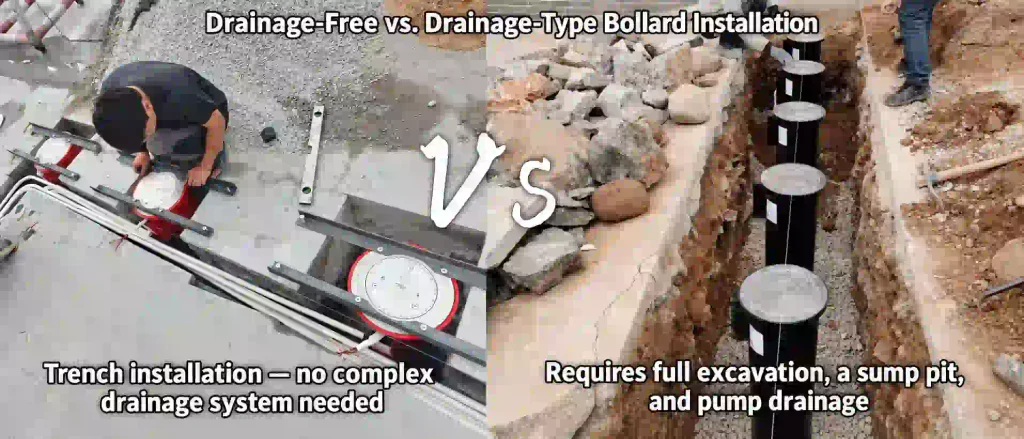
| Feature | Drainage-Free Bollard | Conventional Bollard |
|---|---|---|
| Drainage Pipe | Not required | Required |
| Drainage Well | Not required | Usually required |
| Installation | Simpler | More civil work |
| Poor Drainage Sites | Suitable | More challenging |
| Groundwater Risk | Lower dependence on drainage | Requires proper drainage |
| Maintenance | Reduced drainage maintenance | Drainage requires inspection |
| Initial Product Cost | May be higher | Usually lower |
| Civil Work Cost | Often lower | Often higher |