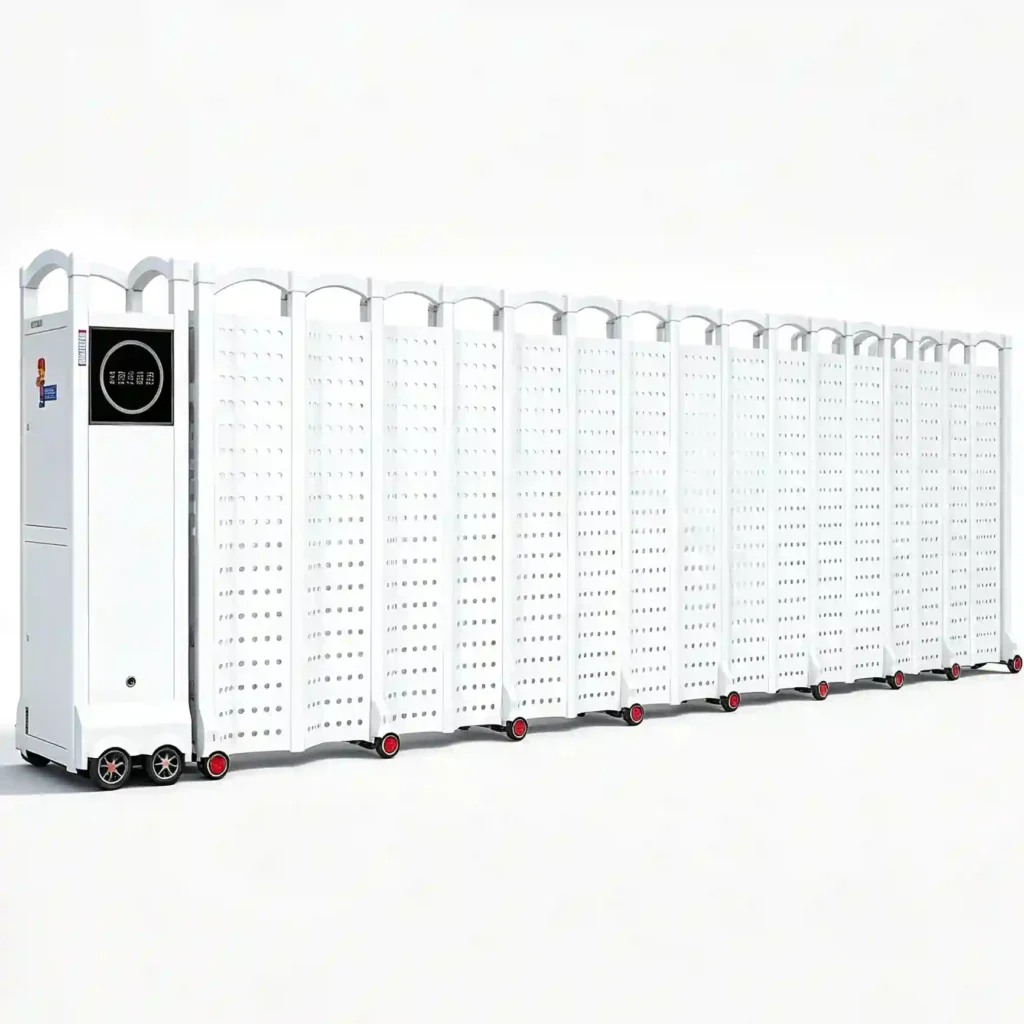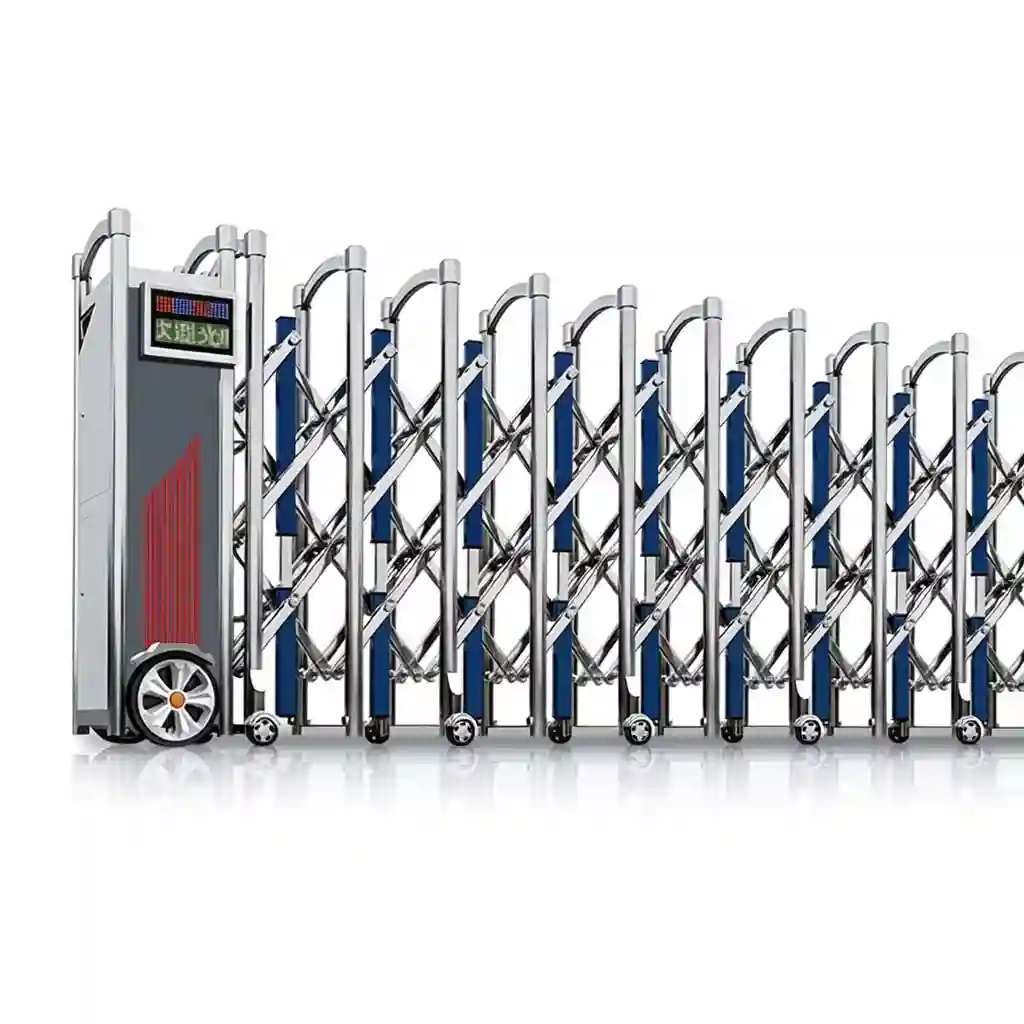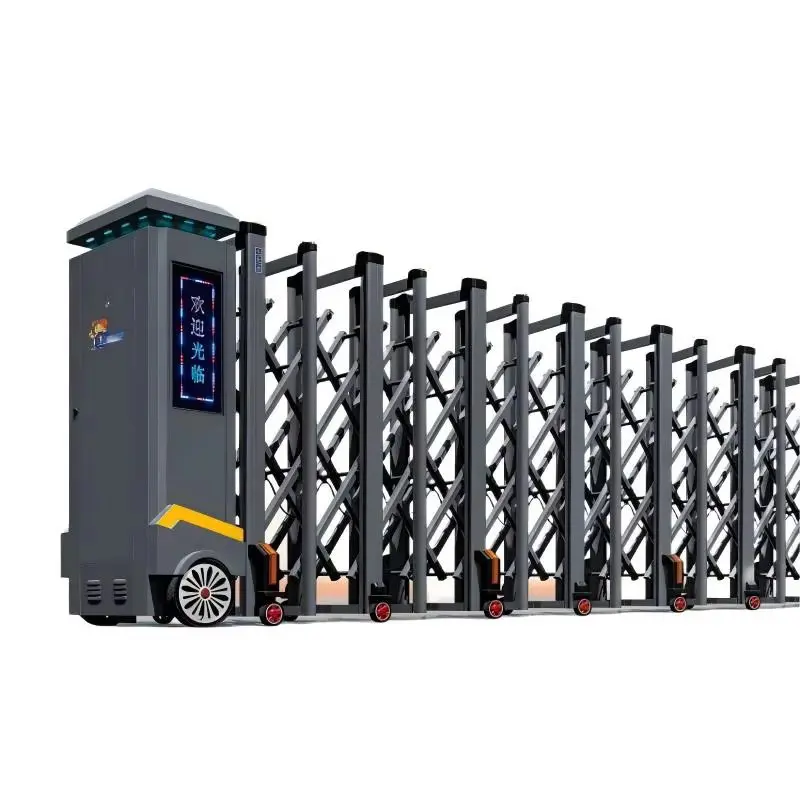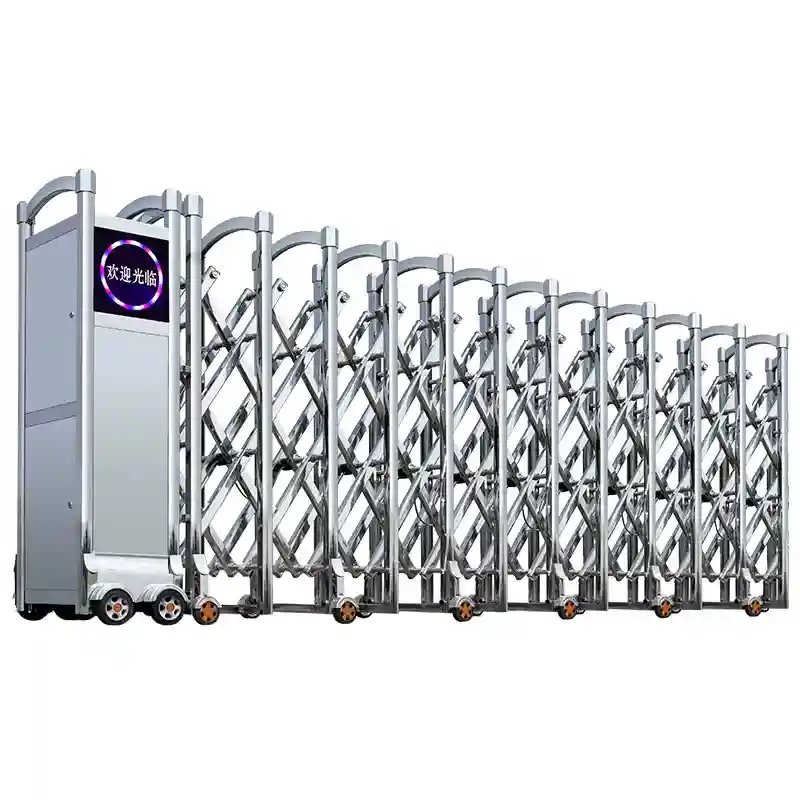
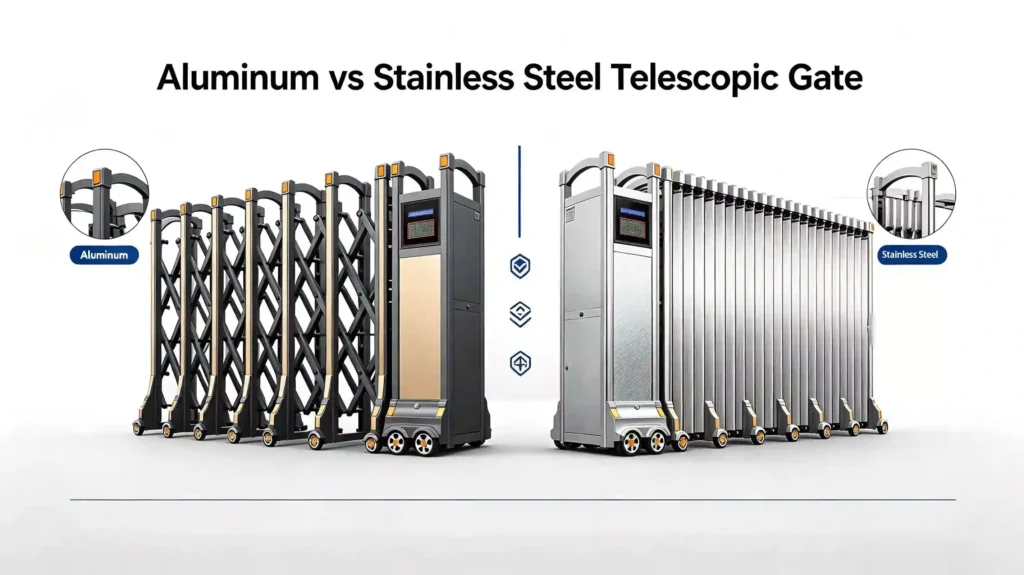
Choosing between a stainless steel retractable gate and an aluminum alloy retractable gate is not simply a question of which material is “better.”
Both stainless steel and aluminum alloy retractable gates are suitable for commercial and industrial entrances, but they serve different project priorities. Stainless steel is generally preferred when structural robustness and heavy-duty use are the main concerns, while aluminum alloy is often selected for its lighter weight, modern appearance, and corrosion resistance. The better choice depends on entrance width, operating frequency, local environment, budget, and design requirements.
In general, stainless steel retractable gates are often preferred for projects that prioritize a robust industrial appearance and heavy-duty construction, while aluminum alloy retractable gates are attractive for projects that value lower moving weight, corrosion resistance, and modern architectural design.
The right choice depends on your entrance width, operating frequency, installation environment, gate design, access-control requirements, and budget.
Quick Answer: Stainless Steel or Aluminum Retractable Gate?
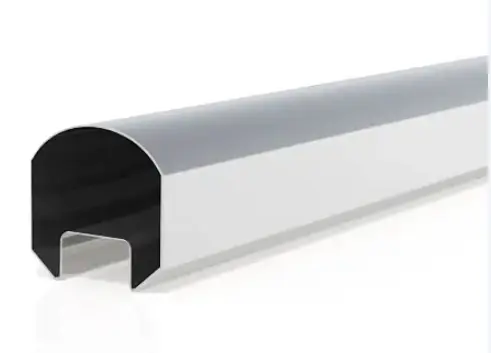
Choose Stainless Steel If…
- Heavy-duty operation is a priority
- The entrance has intensive vehicle traffic
- Structural robustness is important
- The project prefers a classic industrial appearance
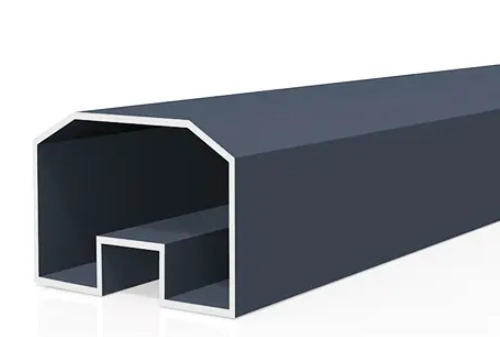
Choose Aluminum Alloy If…
- Lower moving weight is preferred
- Modern architectural appearance matters
- Corrosion resistance is important
- The project requires more finish/color options
Stainless Steel vs Aluminum Retractable Gate: Quick Comparison
| Factor | Stainless Steel Retractable Gate | Aluminum Alloy Retractable Gate |
| Structural robustness | Usually stronger/heavier-duty | Depends strongly on profile design |
| Weight | Heavier | Lighter |
| Corrosion resistance | Excellent with suitable stainless grade | Excellent |
| Appearance | Industrial / metallic | Modern / architectural |
| Finish options | Relatively limited | More color/finish flexibility |
| Maintenance | Low | Low |
| Large entrances | Suitable with proper design | Suitable with proper profile design |
| Frequent operation | Suitable | Lighter structure can be advantageous |
| Coastal projects | Grade/specification must be selected carefully | Often considered due to corrosion resistance |
| Cost | Depends on steel grade and structure | Depends on profile and finish |
| Best suited for | Industrial/heavy-duty projects | Commercial/architectural projects |
There is no universal winner. The best material is the one that matches the operating conditions and design requirements of the project.
1. Durability and Structural Strength
For an automatic retractable gate, durability depends on much more than the basic material.
The complete gate structure includes the main frame, vertical profiles, cross-bracing system, wheels, drive components, motor, control system, connectors, and supporting hardware.
Stainless steel is commonly associated with a solid and robust structure, making it attractive for industrial entrances where customers expect a strong visual and structural presence.
Aluminum alloy has a lower material weight and a high strength-to-weight ratio. Properly designed aluminum profiles can therefore create a strong gate body without making the moving structure unnecessarily heavy.
However, it is misleading to compare two retractable gates based only on the words “stainless steel” and “aluminum.”
You should also compare:
- Profile cross-section
- Material grade or alloy
- Wall thickness
- Internal reinforcement
- Gate height
- Total extended length
- Expansion mechanism
- Wheel configuration
- Motor capacity
- Manufacturing quality
A well-engineered aluminum retractable gate can outperform a poorly designed stainless steel gate, and the reverse is also true.
Which Is Better for Heavy-Duty Use?
For demanding industrial applications, stainless steel is often considered when customers prioritize a robust structure and industrial appearance.
However, for very long or frequently operated entrances, the lower moving weight of a properly engineered aluminum gate may also provide an important operational advantage.
The final decision should therefore be based on the complete gate engineering specification, rather than material name alone.
2. Corrosion Resistance
Corrosion resistance is one of the most important factors for an outdoor retractable gate because the gate may be exposed to:
- Rain
- Humidity
- Dust
- Air pollution
- Salt
- Industrial contaminants
- Temperature changes
Both stainless steel and aluminum alloy can provide good outdoor corrosion resistance, but they protect themselves in different ways and their performance depends on the exact material specification.
Stainless Steel Retractable Gates
Stainless steel contains chromium, which allows a protective passive layer to form on the surface.
However, not all stainless steels provide the same level of corrosion resistance.
For example, 304 and 316 stainless steel should not automatically be treated as equivalent. Where chloride exposure or coastal conditions are important, a more corrosion-resistant stainless grade may be appropriate.
Surface finish, fabrication quality, contamination, cleaning frequency, and environmental exposure also affect long-term appearance.
Aluminum Alloy Retractable Gates
Aluminum naturally forms a thin protective oxide layer on its surface.
For architectural products, additional treatments such as anodizing or powder coating can provide both decorative and protective benefits.
The actual performance still depends on:
- Aluminum alloy
- Surface treatment
- Coating quality
- Fasteners and connectors
- Local environment
- Maintenance
Which Gate Is Better in Coastal Areas?
There is no responsible answer based on material name alone.
For a coastal project, evaluate:
- Distance from the sea
- Salt exposure
- Humidity
- Rainfall
- Industrial pollution
- Stainless steel grade or aluminum alloy
- Surface treatment
- Hardware material
- Cleaning requirements
For stainless steel gates, choosing an appropriate grade becomes especially important in chloride-rich environments.
For aluminum gates, alloy selection, coating quality, and compatible hardware should also be carefully specified.
If your project is located near the coast, tell the supplier before ordering rather than selecting a gate only from photographs or price.
3. Weight and Automatic Gate Operation
One of the clearest practical differences between aluminum and stainless steel is weight.
Aluminum is significantly less dense than steel, although a finished gate cannot be compared by material density alone because profile dimensions and structural design may differ.
Why does gate-body weight matter?
An automatic retractable gate repeatedly performs three actions:
Start → Move → Stop
The complete drive system must move the gate body every time the entrance opens or closes.
A lower moving mass can be beneficial for applications involving:
- Frequent opening and closing
- Long entrance widths
- High daily traffic
- Automatic access-control operation
However, this does not mean every aluminum gate requires a smaller motor or automatically lasts longer.
Motor selection must consider the actual gate weight, length, wheel resistance, ground condition, operating frequency, slope, wind exposure, and drive-system design.
Buyer Tip
When comparing quotations, do not ask only:
“What material is the gate?”
Also ask:
“What motor and drive system are specified for this gate length and operating frequency?”
That question gives you much more useful information about the complete system.
4. Appearance and Customization
The visual difference between stainless steel and aluminum can be important for projects where the entrance forms part of the building architecture.
Stainless Steel Appearance
Stainless steel retractable gates typically provide a clean metallic appearance.
Common visual styles include:
- Brushed stainless steel
- Polished stainless steel
- Natural metallic finish
- Industrial design
- Minimalist security entrance
This appearance works particularly well with factories, industrial parks, logistics facilities, and modern commercial entrances.
Aluminum Alloy Appearance
Aluminum profiles provide considerable design flexibility.
Depending on the product specification, they can support:
- Powder-coated finishes
- Different colors
- Contemporary profile designs
- Architectural styling
- Customized decorative elements
For residential developments, offices, commercial properties, schools, and architecturally coordinated entrances, this flexibility can be valuable.
Which Looks Better?
That is primarily a project-design question.
Choose stainless steel if the entrance needs a strong metallic and industrial character.
Choose aluminum when color matching and architectural integration are higher priorities.
5. Maintenance Requirements
Both stainless steel and aluminum retractable gates can be relatively low-maintenance when correctly specified and installed.
However, low maintenance does not mean no maintenance.
For either material, routine inspection should include:
- Cleaning dirt and contaminants from the gate body
- Checking wheels and moving components
- Inspecting the expansion mechanism
- Checking fasteners
- Inspecting cables and electrical connections
- Testing safety sensors
- Checking motor operation
- Keeping the travel area clear
In coastal, dusty, humid, or industrial environments, the gate body may require more frequent cleaning.
Which Material Requires Less Maintenance?
There is no universal answer.
In many real projects, maintenance problems come from moving components, control systems, poor installation, contaminated surfaces, or incorrect material selection, rather than from the base material alone.
When evaluating maintenance, consider the complete automatic gate system.
6. Cost: Which Retractable Gate Is More Expensive?
It is tempting to say:
“Stainless steel is more expensive.”
or:
“Aluminum is cheaper.”
But this comparison is too simple for a project quotation.
The price of a retractable gate can be affected by:
- Stainless steel grade
- Aluminum alloy
- Profile thickness
- Gate height
- Entrance width
- Structural design
- Motor system
- Control system
- Surface treatment
- Safety devices
- Access-control integration
- Shipping dimensions
- Installation requirements
A heavily reinforced aluminum gate may cost more than a basic stainless steel model, while a high-grade stainless steel gate may cost considerably more than a standard aluminum design.
Therefore, compare equivalent gate specifications, not material prices in isolation.
Consider Total Cost of Ownership
For commercial and industrial projects, the lowest purchase price is not always the lowest long-term cost.
Consider:
**Initial purchase cost
- installation
- maintenance
- replacement parts
- downtime
- service life
= total cost of ownership**
For a busy factory or industrial park, gate downtime can be more expensive than a small difference in initial purchase price.
7. Which Material Is Better for Different Applications?
The most useful way to compare stainless steel and aluminum retractable gates is to consider the actual installation environment.
Industrial Parks
Important factors:
- Long entrances
- Frequent traffic
- Security
- Outdoor exposure
- Integration with vehicle access systems
A robust stainless steel design may be attractive for heavy-duty industrial entrances, while an engineered aluminum system can be advantageous where lower moving weight and frequent operation are priorities.
For these projects, evaluate the entire industrial entrance solution, not just the gate body.
Recommended internal link anchor:
industrial entrance solutions
Factories and Warehouses
Factory entrances often require frequent opening and closing during working hours.
Important questions include:
- How many vehicles enter each day?
- What is the opening width?
- Will trucks use the entrance?
- Is automatic vehicle identification required?
- Will the gate operate continuously during shift changes?
Both materials can work.
The motor, wheel system, structural configuration, and traffic-control equipment are often more important than selecting the gate material alone.
Recommended internal link anchor:
automatic retractable gates
Residential Communities
Residential projects usually place greater emphasis on:
- Appearance
- Noise
- Smooth operation
- Access control
- Security
- Architectural coordination
Aluminum alloy retractable gates can be particularly attractive where customized colors and contemporary styling are required.
Stainless steel designs remain suitable where a metallic or more substantial appearance is preferred.
Commercial Buildings
Hotels, office buildings, campuses, and commercial complexes often need security equipment to blend with architectural design.
Aluminum offers considerable flexibility in colors and finishes, while stainless steel provides a premium metallic appearance.
The final selection should coordinate with surrounding fencing, guard booths, façade materials, and other entrance equipment.
Government and Institutional Facilities
Government buildings, schools, hospitals, and institutional projects may prioritize:
- Reliability
- Controlled vehicle access
- Safety
- Emergency operation
- Long-term maintenance
- Integration with security systems
Material selection should form part of a broader security and access-control specification.
Coastal and High-Humidity Areas
Material specification deserves extra attention in coastal environments.
Do not simply request a “stainless steel gate” or “aluminum gate.”
Instead, confirm:
- Exact material grade
- Surface treatment
- Fastener specification
- Exposure conditions
- Cleaning requirements
- Corrosion-protection strategy
This is particularly important for projects exposed to marine salts or aggressive industrial environments.
8. Six Questions to Ask Before Choosing a Retractable Gate
If you are deciding between stainless steel and aluminum alloy, answer these six questions first.
1. How Wide Is the Entrance?
Gate length affects structural design, total moving weight, expansion ratio, motor selection, and wheel configuration.
2. How Often Will the Gate Open and Close?
A residential entrance opening several times per hour has very different requirements from a busy factory entrance operating repeatedly throughout the day.
3. What Is the Installation Environment?
Tell the supplier if the project is:
- Coastal
- High humidity
- Extremely dusty
- Industrial
- Exposed to chemicals
- Exposed to heavy rainfall
- Located in very hot or cold conditions
4. What Appearance Does the Project Require?
Decide whether you prefer:
- Stainless metallic appearance
- Customized color
- Architectural style
- Industrial design
5. Will the Gate Connect to Other Access-Control Equipment?
A retractable gate may need to work with:
- License plate recognition
- RFID readers
- Remote controls
- Access-control software
- Safety sensors
- Traffic lights
- Barrier gates
- Guardhouse control systems
Recommended internal link anchor:
license plate recognition system
Recommended internal link anchor:
automatic barrier gates
6. What Is the Project Budget?
Do not compare quotations until the technical specifications are comparable.
A cheaper quotation may use a different material grade, thinner profile, simpler motor system, or fewer safety components.
9. Stainless Steel vs Aluminum Retractable Gate: Which One Should You Choose?
Here is the simplest decision framework.
Choose Stainless Steel When You Prioritize:
- A robust industrial appearance
- Heavy-duty construction
- Metallic finish
- Structural presence
- A stainless specification appropriate for the installation environment
Choose Aluminum Alloy When You Prioritize:
- Lower moving weight
- Contemporary appearance
- Color customization
- Architectural flexibility
- Corrosion-resistant aluminum profiles and suitable surface treatments
Choose Based on Engineering, Not Material Alone
For most commercial and industrial projects, the better question is not:
“Is stainless steel better than aluminum?”
The better question is:
“Which complete retractable gate configuration is best for my entrance conditions?”
That includes the gate material, structural profile, motor, drive system, wheels, control system, safety equipment, and installation requirements.
10. What We Consider When Recommending a Retractable Gate
When selecting an automatic retractable gate for a project, the material is only one part of the specification.
A professional recommendation should consider:
- Entrance width
- Required gate height
- Daily operating frequency
- Vehicle type and traffic volume
- Installation environment
- Local climate
- Wind exposure
- Ground condition
- Power supply
- Gate operating speed
- Safety requirements
- Motor configuration
- Access-control integration
- Required appearance
- Project budget
For larger industrial entrances, we also recommend considering how the retractable gate works with the rest of the entrance system.
For example, a project may combine:
Retractable Gate + License Plate Recognition + Barrier Gate + Pedestrian Access Control
This creates a more complete entrance-management solution instead of relying on a single gate.
Frequently Asked Questions
Is stainless steel better than aluminum for a retractable gate?
Not always. Stainless steel is often selected for its robust structure and metallic appearance, while aluminum alloy offers lower weight, corrosion resistance, and greater finish flexibility. The better option depends on gate length, operating frequency, environment, structural design, and budget.
Which retractable gate is better for a factory?
Both materials can be suitable for factories. For a high-traffic industrial entrance, focus on gate structure, motor capacity, wheel system, operating frequency, and access-control integration in addition to the material.
Is an aluminum retractable gate strong enough for industrial use?
Yes, an appropriately engineered aluminum alloy retractable gate can be used for industrial applications. Strength depends on the alloy, profile geometry, wall thickness, reinforcement, gate dimensions, and overall structural design.
Does a stainless steel retractable gate rust?
Stainless steel has strong corrosion resistance, but it is not completely immune to corrosion under every condition. Stainless grade, surface finish, chloride exposure, contamination, and maintenance all affect performance.
Is 304 or 316 stainless steel better for a coastal gate?
316 stainless steel generally provides greater resistance to chloride-containing environments than 304, which can make it a more suitable option for many coastal applications. However, severe marine exposure may require additional material-selection and maintenance considerations.
Is aluminum suitable for coastal environments?
Aluminum can perform well in coastal environments when the appropriate alloy, surface treatment, hardware, and maintenance strategy are selected. The complete specification should be reviewed for the actual exposure conditions.
Which gate is easier to maintain?
Both stainless steel and aluminum gates can have relatively low maintenance requirements. In practice, wheels, motors, sensors, expansion mechanisms, control systems, installation quality, and environmental contamination often have a major influence on maintenance.
Which material is cheaper?
There is no fixed answer. Gate cost depends on material grade, profile design, dimensions, motor system, finish, safety equipment, and customization. Compare complete technical specifications rather than material names alone.
Which retractable gate is better for frequent opening and closing?
Both can be designed for frequent operation. Because aluminum has lower material weight, an aluminum gate can offer advantages in moving mass, but motor sizing and actual performance must be calculated from the complete gate design.
Can retractable gates connect with license plate recognition?
Yes. Automatic retractable gates can be integrated with license plate recognition, remote control, RFID, access-control systems, safety sensors, and other entrance-management equipment, depending on the control system design.
Need Help Choosing the Right Retractable Gate?
Still deciding between a stainless steel and aluminum alloy retractable gate?
You do not need to choose the material based on guesswork.
Send us the following project information:
- Entrance width
- Required gate height
- Installation country or city
- Indoor or outdoor installation
- Coastal or non-coastal environment
- Estimated daily operating frequency
- Vehicle type
- Access-control requirements
- Preferred design or reference photo